
Supported Living vs Residential Care: Which Is Right for Adults with Disabilities?
Supported living is designed for adults who can live with some independence while receiving planned support. Residential care is better suited to adults who require structured daily supervision, personal care, and long-term support within a residential setting.
Families exploring long-term care for an adult with disabilities often compare supported living and residential care, but the two are not the same. Supported living usually suits adults who can manage some parts of daily life with planned assistance, while residential care is often better for adults who need structured routines, daily supervision, personal care support, and long-term continuity in one place.
For adults with cerebral palsy, Down syndrome, severe learning disabilities, intellectual disability, or related neurodevelopmental needs, the right option depends on safety, supervision, communication, mobility, routine, and the family’s long-term care planning concerns. At Saksham by Kriti, this question is closely tied to the larger “What After Us?” concern that many parents carry for the future.
Choosing between supported living and residential care should be based on an individual's functional abilities, healthcare needs, and long-term goals rather than the diagnosis alone.
Team Saksham By kriti
What is supported living?
Supported living is a care model in which an adult lives with a degree of independence while receiving help according to their needs. Depending on the setup, this support may include help with meals, medication, personal routines, appointments, supervision, and community participation rather than round-the-clock care in a fully structured residential setting.
What is residential care?
Residential care is a structured, full-time living arrangement where an adult lives in a care home and receives regular support, supervision, and personal care. Saksham by Kriti’s residential care model is designed for adults with intellectual disabilities, developmental disabilities, cerebral palsy, Down syndrome, and severe learning disabilities who need stable long-term care.
Residential care may include 24-hour supervision, personal care support, structured daily routines, medication observation, mobility support where needed, and family-centred planning. For many families, it is chosen not only for safety but also for emotional wellbeing, routine, dignity, and continuity of care.
Expert Insight from Saksham by Kriti
Over the years, our multidisciplinary team has found that the choice between supported living and residential care is rarely determined by a diagnosis alone. Factors such as communication abilities, daily supervision needs, behavioural support, family availability, and long-term planning often influence which environment is most appropriate.
Supported living vs residential care
| Area | Supported living | Residential care |
|---|---|---|
| Main goal | Independence with support. | Structured daily care and supervision. |
| Living setup | More independent living arrangement with planned support. | Care home setting with ongoing support. |
| Supervision | Lower to moderate, depending on the adult’s needs. | Higher and more consistent, often throughout the day. |
| Daily routine | More flexible. | More structured and guided. |
| Best for | Adults who can manage some daily activities with support. | Adults who need regular help, supervision, and routine. |
| Family concern it often solves | How to support independence safely. | How to ensure long-term continuity and stability. |
Which option is better for adults with disabilities?
There is no single answer that works for every adult. The right choice depends on how much support the person needs with communication, mobility, personal care, safety, routine, and emotional regulation.
Supported living may suit adults who can handle some parts of daily life with guidance and do not need continuous supervision. Residential care may be a better fit when the person needs hands-on help, a predictable routine, and a more stable environment that the family may no longer be able to provide at home every day.
When supported living may be the right fit
Supported living may be the better option when:
- the adult can manage some daily activities with assistance,
- the person benefits from some independence rather than a fully structured care home,
- the family is looking for support without full-time residential placement, and safety can still be maintained without continuous supervision.
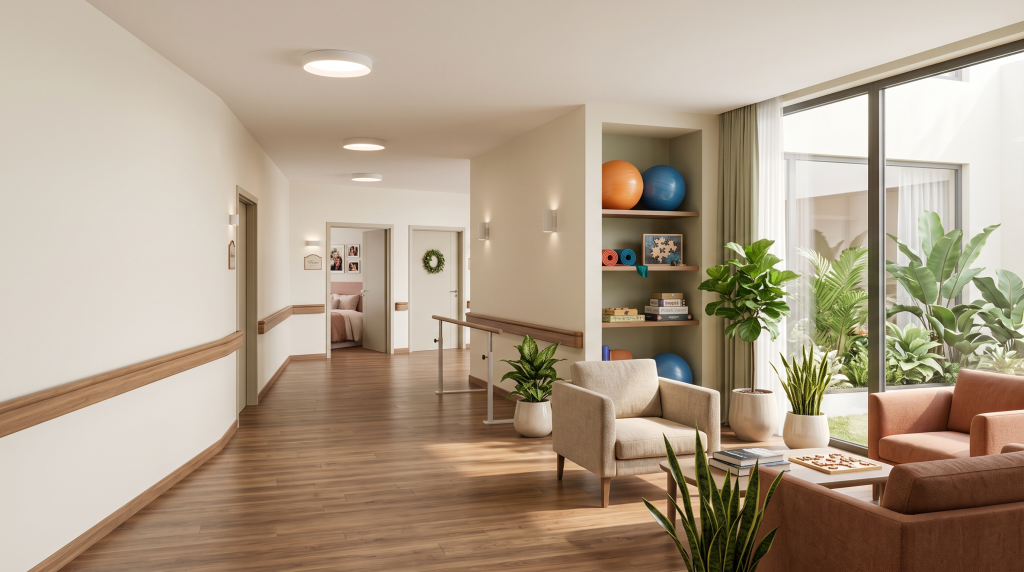
This model is often considered when the adult’s support needs are present but not so intensive that they require a 24-hour structured care environment.
When residential care may be the right fit
Residential care may be the better option when:
- the adult needs regular supervision and personal care support,
- daily routines at home have become difficult to sustain,
- mobility, communication, or behavioural needs require a more structured setting,
- parents or primary caregivers are ageing,
- and long-term planning has become a priority for the family.
For many parents, residential care becomes part of a bigger question about future security and continuity, especially when they are no longer sure they can maintain the same level of daily support at home over the years ahead.
What about cerebral palsy, Down syndrome, and severe learning disabilities?
Adults with cerebral palsy may need support with mobility, routine, supervision, and daily living depending on the severity of their condition. Adults with Down syndrome or severe learning disabilities may benefit strongly from stable routines, guided engagement, supervision, communication support, and an environment designed around long-term wellbeing.
Because these support needs can be lifelong and can change over time, many families eventually compare supported living and residential care not only in terms of independence, but also in terms of safety, emotional stability, and long-term continuity. That is why this decision is closely connected with future care planning rather than just current convenience.
Questions families should ask before choosing
Before deciding between supported living and residential care, families should ask:
- How much daily support does my loved one need right now?
- Can they stay safe with limited supervision?
- Do they need help with dressing, meals, medication, or personal care?
- Does routine make a major difference to their wellbeing?
- Are parents or caregivers able to continue full-time support at home?
- Are we planning only for today, or also for the next 5 to 10 years?
These questions help shift the decision from labels to practical fit. The goal is not to choose the option that sounds better on paper, but the one that genuinely matches the adult’s real support needs.
Why this decision matters in long-term care planning
At Saksham by Kriti, long-term planning is framed around the question “What After Us?”, which reflects the concern many families have about who will provide safety, continuity, dignity, and routine in the future. Future planning is broader than simply finding a place to stay; it includes housing, day-to-day care, medical support, caregiver roles, and long-term stability.
That is why the supported living vs residential care decision matters so much. It is not just a service comparison. It is often a major part of planning for an adult’s future when family circumstances change or when home-based care is no longer sustainable.
How Saksham by Kriti supports families
Saksham by Kriti provides residential care, supported living, and structured long-term support for adults with intellectual disabilities, developmental disabilities, cerebral palsy, Down syndrome, and severe learning disabilities in Gurgaon, Gurugram, and across Delhi NCR. The residential care model includes 24-hour support, structured routines, personal care assistance, and family-centred planning, which makes it especially relevant for families comparing higher-support options.
For families who are not ready for immediate long-term placement, Saksham by Kriti also connects this journey with respite care, day care, and future planning conversations so that decisions can be made gradually instead of only during a crisis.
Choosing the Right Care Model: It's About Individual Needs, Not Just the Diagnosis
Over the years, our multidisciplinary team has found that the choice between supported living and residential care is rarely determined by a diagnosis alone. While a diagnosis provides important medical information, it does not always reflect an individual’s day-to-day support needs.
Factors such as communication abilities, mobility, level of independence, behavioural support requirements, daily supervision needs, medical complexity, family involvement, and long-term care planning all play an important role in determining the most appropriate care environment.
This is why every individual should be assessed holistically. Two adults with the same diagnosis may have very different abilities, goals, and support requirements. At Saksham by Kriti, care planning focuses on understanding the whole person rather than relying solely on a diagnostic label, helping families make informed decisions that support long-term wellbeing and quality of life.
Ready to Discuss Residential Care for Your Loved One?
If you are exploring residential care for an adult with cerebral palsy, Down syndrome, or a severe learning disability in Gurgaon or Delhi NCR, the best next step is a free, confidential consultation with our care team.
We will help you:
- Understand which care tier is right for your loved one
- Walk through what daily life looks like at our facility
- Discuss pricing and deposit details based on your specific needs
- Explore whether day care, respite care or Residentail care might be a better starting point
- Plan for long-term care through our “What After Us” program
FAQ
No. Supported living is designed around greater independence with planned help, while residential care is a more structured care home arrangement with ongoing supervision and daily support.
It depends on the adult’s support needs, but residential care is often more suitable when the person requires structure, supervision, routine, and hands-on daily support.
Sometimes yes, if the person can safely manage some daily functions with support. When mobility, supervision, or personal care needs are higher, residential care may be the more appropriate choice.
No. Residential care is also about routine, emotional wellbeing, social connection, dignity, and long-term continuity of care.
Families often compare them when they are trying to balance independence, safety, daily support needs, and future planning for an adult with lifelong disabilities.
The best way is to assess the adult’s current support needs, level of independence, supervision needs, family capacity, and long-term care concerns before making a decision.
References
- World Health Organization (WHO)
- National Institute for Health and Care Excellence (NICE)
- American Association on Intellectual and Developmental Disabilities (AAIDD)
- National Institute on Disability, Independent Living, and Rehabilitation Research (NIDILRR
Insights & Resources


Activities for Adults With Disabilities: Meaningful Daily Routines & Ideas
Discover meaningful activities for adults with disabilities, from physical, creative and cognitive activities to social and life-skills activities. Learn how personalised daily routines can support choice, participation and independence.
Can Adults With Cerebral Palsy Live Independently? A Guide to Supported Living, Residential Care, and Future Planning
When your child with a developmental disability transitions from a teenager into a young adult, the quiet comfort of childhood routines is often replaced by a pressing, deeply emotional question: What happens when they turn 18 and face the world as an adult? For parents navigating this specific life-stage anxiety, it is entirely common to feel overwhelmed by the long-term choices ahead.

Cost of Residential Care for Disabled Adults in Gurgaon (2026 Guide)
Wondering how much residential care costs for adults with disabilities in Gurgaon? This 2026 guide breaks down monthly fees, deposits, what’s included, and how to compare care homes in Delhi NCR.
Our services
Photo Gallery
Explore photos of Saksham by Kriti in Gurgaon, including our residential spaces, accessible facilities, daily activities and care environment for adults with disabilities.
Personalised Care Plans
Learn how Saksham by Kriti develops personalised care plans for adults with disabilities through assessment, family input, medical oversight and coordinated support across residential care, day care and respite care in Gurugram and Delhi NCR.
Our Multidisciplinary Care Model
Multidisciplinary care team for adults with disabilities in Delhi NCR Our Multidisciplinary Care Model What is a multidisciplinary care model? A multidisciplinary care model brings
This is a helpful comparison of supported living and residential care, especially the focus on choosing an option based on individual needs, independence, and the level of support required. Understanding the available options can help families make more informed decisions. Those exploring assisted living for disabled adults Melbourne should consider the person’s daily needs, preferences, independence, and the type of support environment that would suit them best.